Studio Museum in Harlem · Harlem
Artist Installations
On view from Nov 15, 2025
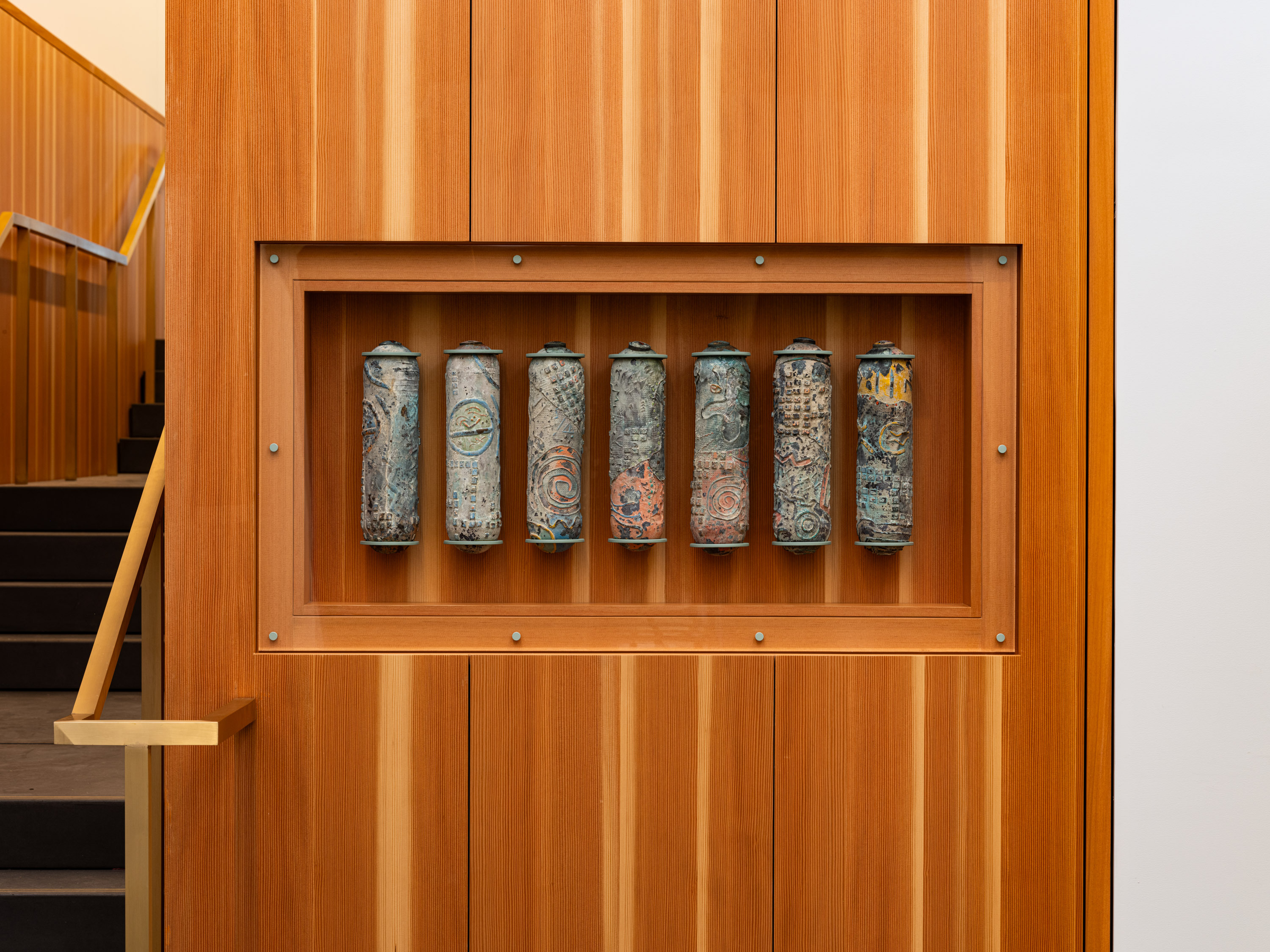
Three landmark installations by Houston E. Conwill, David Hammons, and Glenn Ligon exploring time, identity, and language through bronze capsules, flag imagery, and neon text.
Why go
Conwill's buried time capsules—containing testaments from Romare Bearden, Toni Morrison, and others—won't be opened until 2034; Hammons overlays Pan-African flag colors onto the U.S. flag to collapse competing identities; Ligon's neon work flashes "Me" and "We" to probe the self versus collective.
What to expect
Three distinct site-specific works: bronze time capsules in the sculpture garden, a large-scale flag installation, and a neon-and-PVC text piece (75 5/8 × 74 1/4 in.) exploring binaries of presence and absence.
Things to know
- Conwill's seven bronze capsules buried August 12, 1984, contain confidential messages to be opened September 2034—fifty years later.
- Hammons began using the U.S. flag in his practice in the 1990s; this work collapses Pan-African and American identities.
- Ligon's neon work inspired by Muhammad Ali's 1975 Harvard speech: when asked for a poem, Ali replied "Me? Whee!"
- Pan-African flag invented 1920 by Marcus Garvey's UNIA, headquartered in Harlem 1918–1927.
- Glenn Ligon first installed Give Us a Poem in the Studio Museum lobby in 2007.
- Exhibition on long-term view through September 2028.